


One undocumented inventory transfer can unravel an otherwise clean manufacturing audit. Readiness depends on proving that each material movement, production cost, approval, and close activity works as designed.
Need audit-ready manufacturing controls? Contact GuzmanGray to discuss audit and assurance support before fieldwork begins.
A manufacturing internal controls checklist helps finance and operations teams verify controls across inventory, production, purchasing, costing, revenue, IT, and close risks. Each item should name the risk, owner, frequency, evidence, and test result so auditors can trace control design to consistent performance.
To know whether your controls will stand up, begin with the Manufacturing internal controls checklist for audit readiness. This focused review turns broad control goals into evidence your auditor can test, without losing sight of production realities or close deadlines. Here’s how.
Manufacturing internal controls checklist for audit readiness
A manufacturing internal controls checklist helps finance and operations teams test whether records match activity on the plant floor. It connects financial statement balances to the approvals, counts, production records, and system reports that support them. This focus matters because manufacturing risk extends across inventory, production, and financial reporting.
Start the review before the audit request list arrives. Use the broader internal control assessment checklist to assess company-wide controls, then apply this manufacturing-specific checklist to plant activity. If ownership or evidence is unclear, ask your audit team which gaps to address first.
Why manufacturing controls need a distinct review
General controls often focus on cash, payroll, access, and the financial close. Manufacturers must also show how raw materials become work-in-process and finished goods. Each stage can change inventory quantities, recorded costs, margins, and the timing of entries.
Auditors therefore need evidence from both accounting systems and shop-floor processes. Purchase orders should connect to receiving records and approved invoices. Production orders, material issues, labor records, and completion reports should support inventory movements. A clear manufacturing accounting process flow helps teams find breaks between these records.
Core areas for the checklist
The checklist should name each key control, its owner, how often it runs, and the evidence retained. It should also state who reviews exceptions and how the team resolves them. Manufacturing controls deserve a structured review because they help manage inventory, production, and reporting risks. This manufacturing internal audit resource also supports that risk-based approach.
- Inventory: Cycle counts, annual counts, count adjustments, obsolete stock reviews, and controls over goods held at other sites.
- Production and work-in-process: Approved production orders, material usage, completion status, scrap, rework, and cut-off at period end.
- Standard costing: Approved standards, bill-of-material changes, labor and overhead rates, variance reviews, and updates to outdated assumptions.
- Purchasing and receiving: Vendor approval, purchase authorization, receipt records, invoice matching, returns, and separation of key duties.
- Shop-floor evidence: System access, time records, machine logs, transfer records, supervisor approvals, and retained support for manual entries.
Evidence that supports audit readiness
A checked box alone does not prove that a control worked. For each item, retain a dated report, approval, reconciliation, or exception log. The evidence should show who performed the control, who reviewed it, and what happened when an issue appeared.
Test a small sample before fieldwork begins. Trace selected purchases from approval through receipt and payment. Follow selected production orders from material issue through completion, costing, and the general ledger. This dry run can reveal missing records, unclear ownership, and system reports that do not match the control description.
Finally, reconcile plant records to the financial statements before auditors arrive. Resolve unexplained inventory differences, stale work-in-process, large cost variances, and late receiving entries. Document the cause and approval for each adjustment so the audit trail is complete.
What should be included in a manufacturing internal controls checklist?
A manufacturing internal controls checklist should link each risk area to a clear control, an owner, and proof that the control worked. It should cover both financial reporting and plant operations. This matters because inventory, production, and reporting risks often overlap in manufacturing.
Core checklist areas
The checklist below gives executives a practical starting point. It pairs nine core control areas with the records an auditor will expect to inspect. The scope should match the plant’s products, systems, locations, and reporting duties.
| Control area. | Key controls. | Audit evidence. |
|---|---|---|
| Governance. | Assign control owners; review risks and exceptions. | Risk register, meeting minutes, approval records. |
| Inventory. | Restrict access; perform cycle counts; review adjustments. | Count sheets, variance reports, adjustment approvals. |
| Production. | Approve work orders; track scrap and yield. | Work orders, production logs, scrap reports. |
| Purchasing. | Approve vendors; match orders, receipts, and invoices. | Vendor files, purchase orders, match reports. |
| Payroll. | Approve time; separate payroll setup and payment. | Timecards, change reports, payroll approvals. |
| Revenue. | Approve prices; verify shipment before billing. | Contracts, shipping records, invoices, credit memos. |
| Financial close. | Reconcile accounts; approve entries; review estimates. | Reconciliations, journal support, close checklist. |
| IT access. | Use role-based access; review users and changes. | User lists, access reviews, change logs. |
| Compliance. | Track duties; train staff; test required procedures. | Training logs, inspection records, test results. |
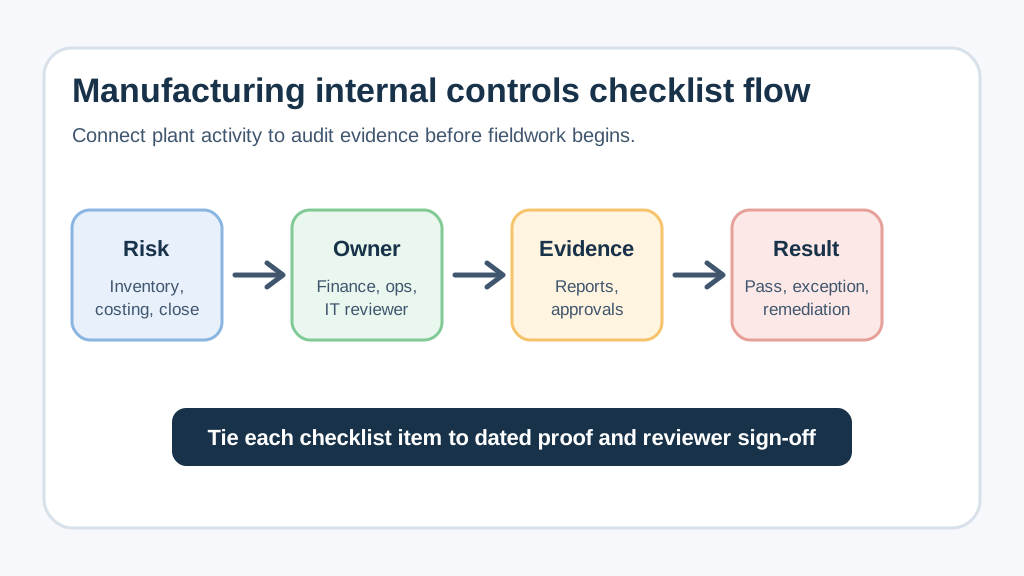
Evidence that proves controls worked
A control description alone is not enough. Each item needs dated proof, a named reviewer, and a record of any issue found. A systematic manufacturing audit plan helps teams find gaps and support ongoing improvement.
Evidence should also connect across systems. For example, inventory count results should tie to the general ledger and explain approved adjustments. The same link should exist between work orders, cost records, and the manufacturing accounting process flow.
Reviewers should sample records from different shifts, product lines, and reporting periods. They should trace each sample from its source document through the final account. This approach tests both control design and daily use.
Risk-based checklist tailoring
Not every plant needs the same tests. Management should give more attention to high-value inventory, manual entries, new systems, and areas with past errors. Control frequency should reflect how quickly a failure could affect operations or financial statements.
Industry rules can add specific checklist items. For example, the NC State CGMP checklist covers personnel, sanitation, equipment, plant operations, and holding practices for animal food facilities. Teams should map such duties to owners, evidence, and review dates.
The finished checklist should state who performs each control and who reviews it. It should also note the control’s timing, needed evidence, and response to exceptions. These details make the checklist useful for routine oversight and audit readiness.
Inventory and production controls auditors expect to see
Inventory often moves through receiving, storage, production, and shipping before its value reaches the general ledger. Auditors therefore look for controls that connect each physical movement to an approved record. A strong manufacturing internal controls checklist also shows who performs each task, who reviews it, and how the company resolves exceptions.
A documented control plan should test both financial reporting and plant operations. The University of Texas manufacturing audit plan supports systematic reviews of operational efficiency and control gaps. For audit readiness, management should keep evidence that each control operated as designed.
Inventory counts, cut-off, and condition
Cycle counts should cover raw materials, work in process (WIP), and finished goods throughout the year. Staff who do not control inventory records should perform or observe counts. Count sheets need item numbers, locations, quantities, signatures, and notes explaining differences. A reviewer should approve adjustments after comparing count results with the perpetual inventory system.
- Set count frequency based on value, movement, and past count errors.
- Control blank count sheets and track every issued sheet.
- Investigate differences before posting inventory adjustments.
- Retain recounts, approvals, and adjustment support.
At period end, auditors test cut-off around receiving and shipping. Receiving reports, bills of lading, vendor invoices, and sales records should agree on when inventory changed hands. Teams should also flag damaged, obsolete, and slow-moving items. A clear review process supports any reserve or write-down recorded in the accounts.
WIP, scrap, and production records
WIP controls should show which materials entered each job, how labor and overhead were applied, and which units were completed. Production reports must reconcile with inventory movements and accounting entries. This link is central to the manufacturing accounting process flow, because unsupported production data can distort both unit costs and margins.
Scrap and rework need separate codes, approved disposal records, and review against expected rates. Unusual losses should trigger follow-up by someone outside production. Management should also reconcile production orders, warehouse transfers, and finished-goods receipts to the general ledger. Open or stale work orders deserve review before close.
- Match material issues and returns to approved production orders.
- Compare completed units with finished-goods receipts.
- Review scrap trends and approve scrap disposals.
- Reconcile WIP reports to the general ledger each close.
BOM, routing, and standard cost governance
Bill of materials (BOM) and routing changes affect expected material, labor, and overhead costs. Access should be limited, and each change should show a request, approval, effective date, and reason. The person approving a change should not also maintain the related master data or post resulting journal entries.
Standard costs also need a set update process. Finance and operations should review source prices, labor rates, routing times, overhead assumptions, and resulting variances before new standards take effect. Auditors may trace these inputs through the company’s manufacturing cost accounting methodologies and verify that approved standards reach the accounting system.
Segregation of duties ties these controls together. No one person should be able to receive goods, change inventory records, approve adjustments, and reconcile the account. Where staffing limits separation, management can add documented review, exception reports, or periodic independent checks. Auditors will expect proof that these backup controls operated during the period.
Want a second look at your manufacturing audit evidence? Talk to GuzmanGray about control testing, documentation, and audit readiness.
Cost accounting, purchasing, and revenue controls to document
A manufacturing internal controls checklist should connect each transaction to its source record, approval, accounting entry, and final reconciliation. That trail helps management spot gaps before they affect margins or financial statements. An internal audit plan can also support a systematic review of risks and control gaps.
Cost standards and overhead allocation
Document who sets standard costs, which data they use, and who approves each update. Keep labor rates, bills of materials, and overhead allocation rules under version control. Compare standards with actual results, then require a clear review of material variances.
The review should explain whether a variance came from price, usage, labor efficiency, volume, or an outdated standard. Tie inventory values and cost of goods sold to the general ledger at month-end. These steps make manufacturing cost accounting methodologies easier to test and repeat.
Assign an owner to review work-in-process balances, overhead absorption, scrap, and slow-moving inventory. The owner should retain calculations, source reports, approval evidence, and notes about unusual items. Reconciliations should show each difference, its cause, the planned correction, and the person responsible.
Purchasing and payment controls
Separate the ability to request goods, approve vendors, issue purchase orders, receive items, and release payments. New vendors and changes to bank details need independent approval. Access reviews should also remove purchasing rights when an employee changes roles or leaves.
A three-way match compares the approved purchase order, receiving record, and vendor invoice before payment. Set clear rules for price or quantity differences. Staff should record approved exceptions and resolve unmatched items before the close.
- Use numbered purchase orders and track missing or canceled numbers.
- Record receipt dates, quantities, condition, and the employee who accepted the goods.
- Review duplicate invoices, unusual payment terms, and payments outside the normal process.
- Reconcile unpaid receipts and vendor statements to the accounts payable ledger each month.
Revenue, shipping, and close controls
Revenue controls should link approved customer terms to orders, shipments, invoices, and ledger entries. Require credit approval before accepting orders that exceed set limits. Sales staff should not approve their own credit exceptions or change customer terms without review.
Keep signed support for price changes, returns, discounts, and change orders. A change order should state its effect on price, scope, timing, and billing. Management should review the related accounting before recording revenue or updating a contract balance.
Shipping cut-off tests compare shipment dates with invoices and revenue entries around month-end. The team should investigate goods billed before shipment or shipped without billing. It should also reconcile sales, returns, receivables, deferred revenue, and cash receipts to the general ledger.
Close documentation should identify the preparer, reviewer, due date, open items, and review evidence for every reconciliation. This structure supports the broader manufacturing accounting process flow while keeping exceptions visible for follow-up.
IT, cybersecurity, and compliance controls for manufacturers
IT controls belong on any manufacturing internal controls checklist because system activity can affect inventory, production, purchasing, and financial reports. An effective review connects each control to a clear owner, test method, and retained record.
ERP access and system changes
Start with access to the enterprise resource planning system and connected production tools. Role permissions should match job duties. They should prevent one person from starting, approving, and recording the same transaction. Review privileged access, shared accounts, inactive users, and access changes after transfers or departures.
Formal change management helps protect the reliability of system reports and automated controls. Require documented requests, approval, testing, and release records for updates to workflows, reports, interfaces, and master data. These records help auditors trace why a system changed and who approved it.
- Map user roles to purchasing, inventory, production, shipping, and accounting duties.
- Test approvals for vendor, customer, item, bill-of-materials, and routing changes.
- Reconcile data moving between production systems, vendor portals, and the ERP.
Cybersecurity and recovery evidence
Cybersecurity controls should cover the systems and connections that support plant and finance operations. Useful checks include secure account setup, prompt access removal, monitored remote access, patch records, incident response steps, and vendor access reviews. Backups should be protected, tested, and tied to recovery plans.
NIST SP 800-171 is one possible framework for manufacturers in defense or controlled information environments. It is not a blanket requirement for every manufacturer. The right framework depends on contracts, data types, customer terms, and applicable rules.
Audit-ready control records
A control is more reliable when management can show that it worked during the review period. Keep access reviews, approval logs, exception reports, backup test results, and incident records. A university-hosted manufacturing internal audit plan also supports systematic reviews that find control gaps.
Auditors may also test whether system totals agree with source records and the general ledger. Teams can reduce delays when they retain evidence as controls run, rather than rebuilding it later. This same discipline can help a manufacturer prepare for a private company audit.
- Assign an owner and review date to each IT control.
- Retain proof of performance, review, follow-up, and issue closure.
- Track exceptions until the root cause and corrective action are documented.
How to test and maintain your checklist before audit fieldwork
A manufacturing internal controls checklist is useful only when management tests whether each control works in daily operations. Start before fieldwork so the team can fix gaps, support conclusions, and give auditors clear evidence. A systematic internal audit plan can help teams review quality, safety, operations, and related control gaps.
Setting the test plan
Define the test period, locations, transaction types, and evidence needed for each control. Focus first on high-risk flows such as purchasing, inventory moves, production reporting, costing, shipping, and journal entries. Use the same scope that management expects the audit team to review.
Set a completion date early enough to allow retesting after corrections. Teams that need a broader readiness plan can also use these steps to prepare for a private company audit.
Control testing and exception review
Work through the process below in order, but keep the checklist current as facts change. Record who tested each item, what sample was reviewed, when testing occurred, and what the result showed.
Assign owners. Name one control owner and one reviewer for every checklist item. Confirm that each person understands the control purpose, required evidence, test period, and due date.
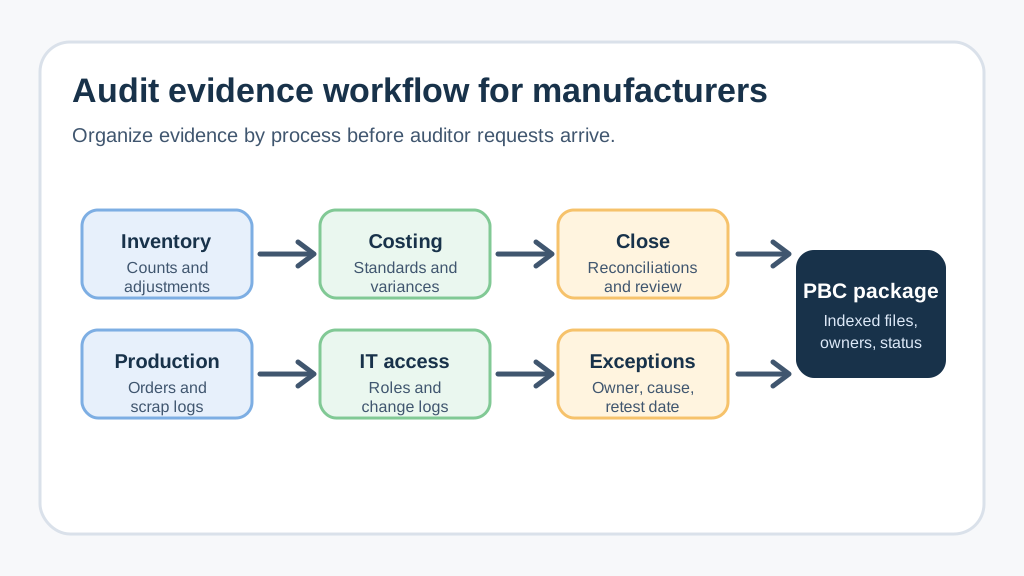
Gather evidence. Collect approvals, reconciliations, inventory count records, system reports, invoices, production logs, and access reviews. Save each item with a clear file name that matches the checklist reference.
Walk transactions. Select transactions from start to finish and compare actual work with the documented process. Trace key details through the manufacturing accounting process flow, including inventory, costing, shipment, and ledger posting.
Resolve exceptions. Log missing approvals, late reviews, unexplained differences, and process workarounds. Assign each issue an owner, due date, cause, correction, and retest result rather than marking it complete too soon.
Update policies. Revise the checklist and policy when the actual process has changed. Keep version dates, approval records, and change notes so auditors can see which procedure applied during the test period.
Prepare the PBC package. Build an indexed prepared-by-client folder that ties every request to supporting evidence. Include the final checklist, exception log, corrections, retest results, reconciliations, and named contacts for follow-up questions.
The audit handoff
Before fieldwork, a reviewer should confirm that evidence supports each conclusion and that open items have clear status notes. Remove duplicate drafts, protect sensitive files, and test access to shared folders. Keep one controlled checklist version so responses remain consistent across finance, operations, and plant teams.
Management should also agree on who will answer auditor questions and how new requests will be tracked. For help testing controls or organizing the PBC package, contact GuzmanGray before fieldwork begins.
Preparing for fieldwork now? Contact GuzmanGray to prioritize the controls, evidence, and remediation steps that matter most for your audit.
Frequently Asked Questions
Why is an internal control checklist important for manufacturing audit readiness?
A manufacturing internal control checklist connects each major risk to a documented control, owner, review schedule, and supporting evidence. This structure helps management find gaps before audit fieldwork begins. It also keeps inventory, production, and financial reporting controls consistent across locations. An internal audit plan can guide systematic reviews and ongoing improvement.
What are the key areas covered in a factory audit checklist?
A factory audit checklist usually covers supplier records, quality systems, worker safety, production documentation, equipment maintenance, and regulatory compliance. A financial audit readiness checklist has a different focus. It should also address inventory counts, standard costs, purchase approvals, revenue recognition, system access, and period-end close controls. Manufacturers may need both checklists because operational and financial risks often overlap.
How often should a manufacturing risk assessment checklist be conducted?
Manufacturers should complete a formal risk assessment at least annually and update it whenever operations change significantly. New facilities, products, systems, suppliers, regulations, or acquisitions can create risks that require earlier review. Higher-risk controls may need quarterly or monthly testing. Management should align review frequency with risk level, prior findings, and the timing of external audit fieldwork.
What is the purpose of a pre startup safety review checklist?
A pre startup safety review checklist confirms that new or modified equipment is ready before production begins. It verifies installation, operating procedures, employee training, safeguards, emergency plans, and required approvals. The review helps management identify unresolved hazards before workers use the process. Its records can also show auditors that safety controls were completed, reviewed, and approved on time.
Ready to strengthen your manufacturing controls?
Waiting until audit fieldwork begins can expose unresolved control gaps when timelines are tight and staff already have competing priorities. Late discoveries can create avoidable rework, slow responses, and weaken support for inventory, costing, production, and financial reporting records. Starting now gives finance and operations leaders time to assign owners, improve documentation, test key controls, and resolve weaknesses before the audit.
A focused review today can help your team organize evidence, align departments, and enter fieldwork with fewer last-minute questions or preventable delays. You can also create a practical plan for correcting issues before they disrupt the audit schedule or consume valuable staff time. Ready to build a clearer path to audit readiness? Call (949) 922-7258 or contact GuzmanGray for manufacturing audit and assurance support.