


For the CFO of a Japanese-owned U.S. subsidiary, financial reporting is not merely a compliance exercise. It is the operating language that must satisfy U.S. regulators, withstand audit scrutiny, and give a Japanese parent company confidence in local performance. The right japanese cpa firm makes those objectives work together rather than compete.
A Japanese CPA firm helps a U.S. subsidiary align U.S. GAAP, audit requirements, internal controls, and parent-company reporting expectations through bilingual, bicultural coordination. For public issuers and IPO candidates, PCAOB-registered audit capability is critical. For every cross-border finance team, the central value is clear communication that supports sound decisions and disciplined execution.
Managing a foreign subsidiary requires finance leaders to reconcile different accounting frameworks, governance expectations, and communication norms. The sections below explain where specialized support creates the most value, how to assess a prospective firm, and when a change in business circumstances should trigger a conversation.
What does a Japanese CPA firm help U.S. subsidiaries accomplish?
A specialized japanese cpa firm coordinates audit, accounting, advisory, and parent-company reporting across jurisdictions. Its role is to translate technical requirements and business expectations into a controlled reporting process that gives U.S. management and Japanese headquarters a consistent. Decision-useful view of the subsidiary.
Bridging the gap between two cultures
Local finance teams often need to explain U.S. results, judgments, and control matters to stakeholders accustomed to different terminology and decision protocols. A bilingual, bicultural engagement team establishes clear ownership, translates technical concepts accurately, and structures information so Japanese headquarters can evaluate it with confidence.
Professionals who understand both U.S. and Japanese business practices can identify misunderstandings early, clarify the implications for management, and coordinate timely resolution. They serve as a reliable interface between local operators and parent-company leadership, strengthening governance while preventing minor communication gaps from becoming material reporting risks.
Meeting strict U.S. audit standards
Public firms and those planning to go public must meet high standards. The U.S. SEC requires these companies to work with a Japanese-speaking PCAOB auditor for their reports. Per PCAOB Rule 2100, any firm that issues an audit report for a public company must be registered. This rule ensures that audits meet the best technical and quality levels.
Working with a registered firm protects the U.S. unit from major risks. If a firm is not listed, the SEC may view their reports as not audited. This can stall an IPO or cause issues with legal filings. A Japanese-led firm knows how to follow these rules while meeting the tight deadlines set by Japanese headquarters.
Using modern tech for faster results
Modern firms use tools like AI and cloud software to work better and faster. These tools help teams sort through data and find errors with more ease. This tech-led approach allows for a four-phase audit method that stays on budget. It helps Japanese units get their reports done on time without losing quality.
Cloud systems also make it easier for teams to work together across different time zones. Leaders can see their financial data in real time from anywhere in the world. This level of speed and focus gives business owners the peace of mind they need to grow. By using data tools, a firm can give better advice that helps a company reach its goals.
Why does bilingual and bicultural communication matter?
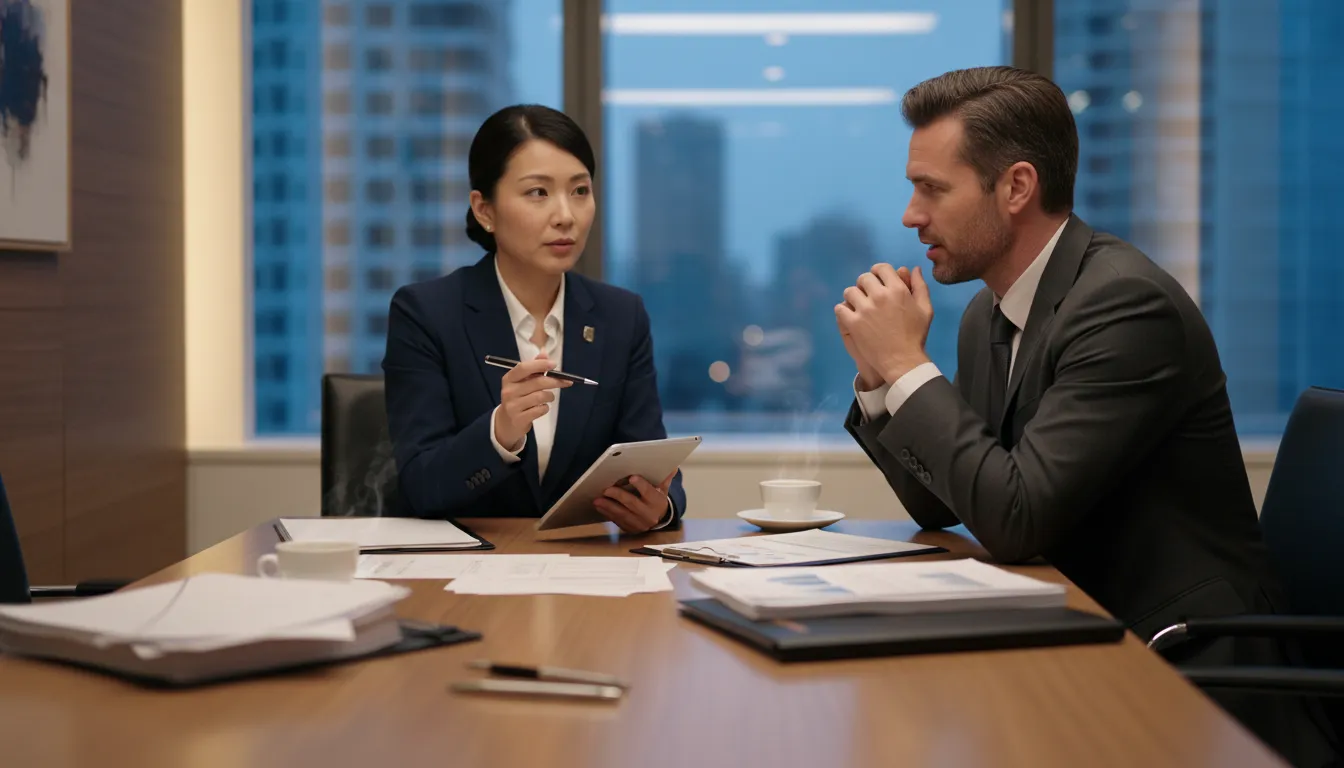
Bilingual capability improves more than translation. It helps finance leaders communicate the substance, urgency, and governance implications of U.S. reporting matters in terms Japanese headquarters can act on. Bicultural judgment also reduces ambiguity around responsibilities, escalation, and approvals, helping both teams reach informed decisions without compromising technical precision.
Bridging the reporting gap
When a U.S. team sends data to Japan, things can get lost. Complex terms in the U.S. do not always match what Japan expects. This creates friction during the audit. A team that knows both systems can spot these issues fast. They can explain U.S. rules in a way that makes sense to the home office. This cuts down on stress and saves time for everyone.
The home office wants to know that the U.S. unit follows all rules. If the terms are not clear, they may doubt the facts. This leads to more questions and more work. GuzmanGray provides accounting and audit services for Japanese companies that fix this. We help the U.S. team use the same financial language as their leaders. This makes the whole reporting chain much stronger.
Managing cultural habits in audit
Culture plays a big role in how teams share facts. In Japan, business talk is often soft and indirect. In the U.S., it is more direct. This can lead to mix-ups during a review. A team that knows both cultures knows how to handle these shifts. They know when to ask for more info and how to show findings with care.
Good rules help make audits better for everyone. Research shows that regulatory oversight can improve audit quality and value. Our bilingual staff brings this care to every job. We know what Japanese leaders expect. We also know the strict U.S. rules. This mix of skills keeps your firm in good standing. We act as a bridge that brings these two worlds together.
- Clearer goals for the U.S. staff.
- Better data for the home office.
- Less risk of reporting errors.
- Stronger trust across borders.
Faster results with bilingual teams
Timely reporting depends on removing avoidable interpretation and handoff friction. A bilingual team can discuss technical matters directly with both U.S. personnel and Japanese stakeholders, preserving nuance while accelerating clarification, evidence collection, and review. A Japanese-speaking PCAOB auditor can integrate that communication discipline into the audit itself.
GuzmanGray’s four-phase audit methodology combines bilingual coordination with senior-level involvement. The objective is not speed in isolation, but an orderly process in which issues are surfaced early. Responsibilities remain visible, and decision makers receive clear information in time to act.
How can subsidiaries bridge Japanese reporting expectations and U.S. requirements?
Subsidiaries can bridge the two environments by mapping parent-company requests to U.S. GAAP, documenting differences, and establishing a bilingual review cadence with clear accountability. A specialized Japanese CPA firm helps management convert distinct frameworks and expectations into one coherent reporting process without obscuring local compliance obligations.
Aligning parent company needs with U.S. GAAP
Japanese headquarters usually require frequent, detailed updates to stay in sync with global goals. However, the technical details of U.S. GAAP can differ from Japanese standards in areas like revenue recognition or lease accounting. Bridging this gap requires a team that understands both systems. This ensures that the financial data sent back to Japan is accurate and ready for consolidation while staying fully compliant with U.S. laws.
Communication is the most common hurdle in these cross-border relationships. Team members must be skilled at bridging cultural and language barriers to maintain transparency. When a U.S. subsidiary uses a firm that speaks both languages, they can explain U.S. accounting nuances to the Japanese head office. This reduces the risk of errors and builds trust between the two offices.
Navigating audit and internal control standards
U.S. reporting often includes strict rules for internal controls and public disclosures. For companies that are public or planning to go public, the rules are even tighter. Under SEC regulations, any firm that issues an audit report for a public issuer must be registered with the PCAOB. Without this registration, the SEC considers the financial statements “not audited,” which can lead to major legal and financial issues.
A Japanese parent company may also have specific internal control requirements similar to J-SOX. The table below shows how common expectations from a Japanese head office compare to standard U.S. business requirements.
| Reporting Area | Japanese Parent Expectation | U.S. Requirement |
|---|---|---|
| Accounting Framework | May prefer J-GAAP or IFRS for consolidation. | Must use U.S. GAAP for local compliance. |
| Audit Authority | Trusted long-term local partner. | PCAOB registration required for public issuers. |
| Reporting Frequency | High frequency with granular data points. | Standard quarterly and annual filings. |
| Internal Controls | Focus on J-SOX compliance. | Alignment with SOX 404 for public entities. |
| Language | Business-level Japanese for all reports. | English is the legal standard for U.S. filings. |
Maintaining compliance across borders
To stay on track, international clients often need an efficient audit process. Using a clear methodology helps ensure that reporting is both timely and accurate. This is vital for meeting the deadlines of a parent company while satisfying U.S. regulators. Modern tools like AI and data analytics can also help by making the audit process faster and more thorough for middle-market businesses.
Working with a boutique firm can provide the senior-level responsiveness that larger firms often lack. This personalized attention ensures that complex cross-border issues are spotted early. By addressing these gaps before they become problems, a Japanese CPA firm helps the subsidiary stay in good standing on both sides of the Pacific.

How does audit and assurance support protect U.S. growth?
Audit and assurance support protects growth by strengthening reporting credibility, identifying control risks, and preparing the company for scrutiny from boards, lenders, investors, and regulators. For a Japanese-owned U.S. business, a Japanese CPA firm also keeps parent-company stakeholders informed while management pursues financing, expansion, or a potential public offering.
Ensuring PCAOB compliance
PCAOB registration is a must for any firm that audits public companies in the United States. SEC rules say that any firm preparing an audit report for an issuer must register with the PCAOB. If a firm without this status audits an issuer, the SEC will view those reports as not audited. This can cause big delays and costs for firms trying to grow or go public. As a registered firm, GuzmanGray follows these high standards to keep client growth on track.
Audit quality often improves when there is strong oversight from groups like the PCAOB. This check on audit work helps protect the market and gives peace of mind to all involved. Using a Japanese-speaking PCAOB auditor ensures that technical standards are met without losing meaning. This is helpful for firms that need to bridge the gap between U.S. GAAP and Japanese reporting needs.
Building trust through bilingual audit support
Sharing info is often the biggest hurdle for Japanese branches in the U.S. Our Japanese Practice, led by former EY partner Morimasa Ueda, offers full bilingual support. We help bridge cultural and language gaps to keep books clear and in line with rules. This support makes it easier for U.S. teams to talk to their head offices in Japan about audit results. Our team knows both cultures, which helps us find and fix issues fast.
We use a smart four-phase audit method to ensure we deliver on time and on budget. Our team follows these steps to help clients stay in good standing:
- Listen to client goals and define audit tasks.
- Make a custom plan that fits the specific business.
- Do the audit with great care and focus.
- Give clear reports that are easy for all to read.
Following a defined methodology helps Japanese-owned U.S. businesses coordinate responsibilities, address issues deliberately, and satisfy relevant U.S. requirements while keeping headquarters informed.
Maximizing value through audit readiness
Being ready for an audit is about more than just passing a check. It is about building strong internal controls that support long-term growth. We help mid-sized firms and IPO candidates set up these controls. This work makes the actual audit smoother and faster. It also helps firms find ways to work better and save money. Using a boutique japanese cpa firm means you get senior-level care that Big 4 firms often lack.
We use modern tech like AI and data tools to make our audits better. These tools help us spot trends and risks that others might miss. This data-led way of working gives clients deep insights into their financial health. Our focus on tech and high standards helps Japanese businesses thrive in the competitive U.S. market.
How should executives choose the right Japanese CPA firm?
Executives should evaluate a prospective firm on bilingual team depth, bicultural judgment, relevant technical experience, PCAOB status when applicable, senior involvement, and process discipline. The right japanese cpa firm should demonstrate how it will coordinate U.S. requirements with Japanese stakeholder expectations, not merely promise responsive service.
Bilingual and cultural capabilities
Evaluate whether the firm has a genuinely bilingual engagement team rather than relying on a single translator. The team should be able to explain complex U.S. requirements to Japanese executives. Facilitate direct conversations with local personnel, and understand how each organization approaches approvals, escalation, and documentation. Ask who will participate in routine meetings and who will resolve technical issues.
PCAOB status and technical standards
PCAOB registration is essential when the company is public or preparing to become public. Under SEC requirements, financial statements audited by a firm that is not appropriately registered may be considered “not audited” (PCAOB Rule 2100). Executives should also assess industry expertise, technical consultation resources, quality-control practices, senior access, responsiveness, and budget discipline.
- List your service needs. Write down the help you need first. Do you need a full audit or just basic accounting? Make sure the firm focuses on these areas and has worked with other global firms.
- Find bilingual teams. Look for a firm with a special Japanese Practice. It is best to have a Japanese-speaking PCAOB auditor who can talk to your team in Japan.
- Check PCAOB status. Ask if the firm is on the PCAOB list. This is key for public firms. It also helps show they follow high standards for audit quality and oversight.
- Test for speed. See how fast the firm replies to your first few calls. You want a partner who values your time. They should give you direct access to top leaders.
- Review their tools. A modern firm should use tools like AI and the cloud. These tools help make audits faster and more right for companies of all sizes.
The selected firm will influence reporting quality, governance, and the subsidiary’s ability to respond to change. A team that understands U.S. requirements and Japanese stakeholder expectations can provide accounting and audit services for Japanese companies that support disciplined operations. Evaluate each candidate against documented criteria and confirm how its proposed engagement team will work in practice.
When should a Japanese-owned U.S. company seek support?
Operating a U.S. branch of a Japanese firm brings unique hurdles. You must follow local rules while keeping your parent company in Japan informed. Many teams find that a standard local auditor cannot bridge this gap. Engaging a specialized Japanese CPA firm becomes vital when your business reaches specific growth or risk points.
Growth and market entry milestones
When you first set up in the U.S., you may only need basic bookkeeping. But as you grow, your needs change. If you plan to expand your staff or open new sites, you need a firm that understands both cultures. This helps you set up strong internal controls early. It also ensures your financial reporting stays clear for leaders in both countries.
New financing or a public listing also changes your audit needs. If you want to go public, you must follow strict rules. Under PCAOB Rule 2100, any firm that issues an audit report for an issuer must be registered. A Japanese-speaking PCAOB auditor can guide you through this process. They help you stay ready for SEC reviews and parent company requests at the same time.
Reporting delays and control gaps
Slow reporting is a major red flag for Japanese parent firms. If your U.S. team struggles to close the books on time, it may be due to language barriers or poor systems. A Japanese CPA firm can help bridge the communication gap. They work with your local team to find blocks and speed up your month-end close. This keeps your data fresh for the global head office.
You should also seek help if your current audit finds weak internal controls. These gaps can lead to errors or even fraud. Specialized firms can review your workflows and suggest fixes that fit U.S. law. They also explain these changes to your Japanese board in a way they understand. This builds trust and ensures your U.S. branch stays on track.
Transitions and leadership changes
A change in leadership often triggers the need for new support. If your CFO or controller leaves, you may lose vital firm knowledge. A bilingual firm can step in to provide steady hands during the search for a new hire. They ensure your accounting stays on track so you do not miss any deadlines.
Mergers and buyouts also create complex audit needs. If you buy a U.S. firm, you must blend their books with yours. This task requires deep knowledge of both U.S. GAAP and Japanese standards. Seeking expert help early prevents costly errors. It also helps you spot risks before the deal closes, saving you time and money.
A right-sized partner for Japanese companies in the U.S.
Finding the right Japanese cpa firm in the United States is about more than just finding someone who speaks the language. Japanese firms with branches in the U.S. often face a gap in culture and rules. GuzmanGray fills this gap by acting as a right-sized partner that offers high-level skills with personal care. We help these firms meet U.S. standards while keeping a strong bond with their home office in Japan.
Dual-language lead and senior focus
The Japanese Practice at GuzmanGray is led by former Big 4 partners who know the needs of global firms. Our team has the skill to handle complex work but gives the direct care that large firms often lack. By focusing on deep bonds, we make sure every client gets the help they need to grow. This helps us bridge language gaps and make sure all financial reports are clear and right.
Our leaders use their past work at firms like EY to guide clients through the U.S. market. We provide accounting and audit services for Japanese companies that focus on being helpful and quick. We do not just look at the numbers; we look at the goals of your business. This helps us offer advice that makes sense for both the U.S. team and the parent company in Japan.
PCAOB compliance and audit quality
For Japanese firms that are public or plan to go public, audit rules are very strict. Any firm that audits a public company must be on a special list with the Public Company Accounting Oversight Board (PCAOB). If a firm is not on this list, the SEC says their financial reports are not audited. You can learn more about how to find a Japanese-speaking PCAOB auditor to stay in line with these laws.
GuzmanGray is a PCAOB-registered firm. This is a rare status among most U.S. accounting groups. This registration is a must for any firm that writes an audit report for a public company. Based on the SEC Financial Reporting Manual, these rules apply to both local and foreign firms. Our team follows these high standards to give our clients peace of mind for their cross-border work.
Tech-based help for modern brands
We use AI-enabled tools and data analytics to improve audit precision, surface anomalies, and provide management with more useful insight. Our experience spans software, retail, healthcare, and other sectors. For SaaS businesses, that includes technical knowledge of ASC 606 revenue recognition. Technology supports the engagement, while experienced professionals remain accountable for judgments and conclusions.
- Disciplined audits supported by a defined four-phase methodology.
- Technical guidance for software companies addressing complex revenue recognition.
- Bilingual coordination between U.S. teams and Japanese headquarters.
- Industry-informed advice for retail, manufacturing, and healthcare businesses.
Our objective is to serve as a trusted advisor for Japanese companies building durable U.S. operations. We combine technical standards, modern tools, direct senior attention, and accountable delivery so leadership teams can approach reporting obligations and strategic decisions with confidence.
Frequently Asked Questions
When should a Japanese company hire a U.S.-based Japanese CPA firm?
A Japanese company should engage a U.S.-based Japanese CPA firm when entering the U.S. market. Acquiring a business, preparing for an audit, strengthening internal controls, or pursuing financing or an IPO. Early involvement helps management establish sound reporting practices and communicate U.S. requirements clearly to headquarters.
Can Japanese CPA firms assist with Japanese-language financial reporting?
Yes. A bilingual firm can explain U.S. financial reporting matters in Japanese, coordinate requests with headquarters, and help local teams prepare information suitable for parent-company review. The exact reporting deliverables should be defined at the start of the engagement based on the subsidiary’s obligations and the parent’s consolidation process.
How long does a typical audit take for a Japanese subsidiary in the U.S.?
Audit timing depends on the subsidiary’s size, complexity, reporting framework, readiness, and the availability of supporting evidence. Management can improve predictability by confirming scope early, assigning owners to requests. Resolving accounting issues before fieldwork, and maintaining regular communication among the U.S. team, Japanese headquarters, and auditor.
What is the role of a Japanese CPA firm in IPO readiness?
A Japanese CPA firm can help an IPO candidate assess reporting readiness, strengthen internal controls, address technical accounting matters, and prepare for a PCAOB audit. Bilingual coordination also helps U.S. management explain requirements and remediation priorities to Japanese headquarters, boards, and other stakeholders throughout the readiness process.
Ready to strengthen your U.S. reporting and audit readiness?
Cross-border reporting challenges rarely resolve themselves. Clear ownership, disciplined controls, and bilingual technical coordination give finance leaders a stronger foundation for audits, parent-company reporting, and strategic decisions. Engaging the right advisor early allows management to address risks deliberately rather than under deadline pressure.
Call 949-922-7258 to contact GuzmanGray for bilingual audit, assurance, accounting, or advisory support and discuss the priorities of your U.S. subsidiary.